
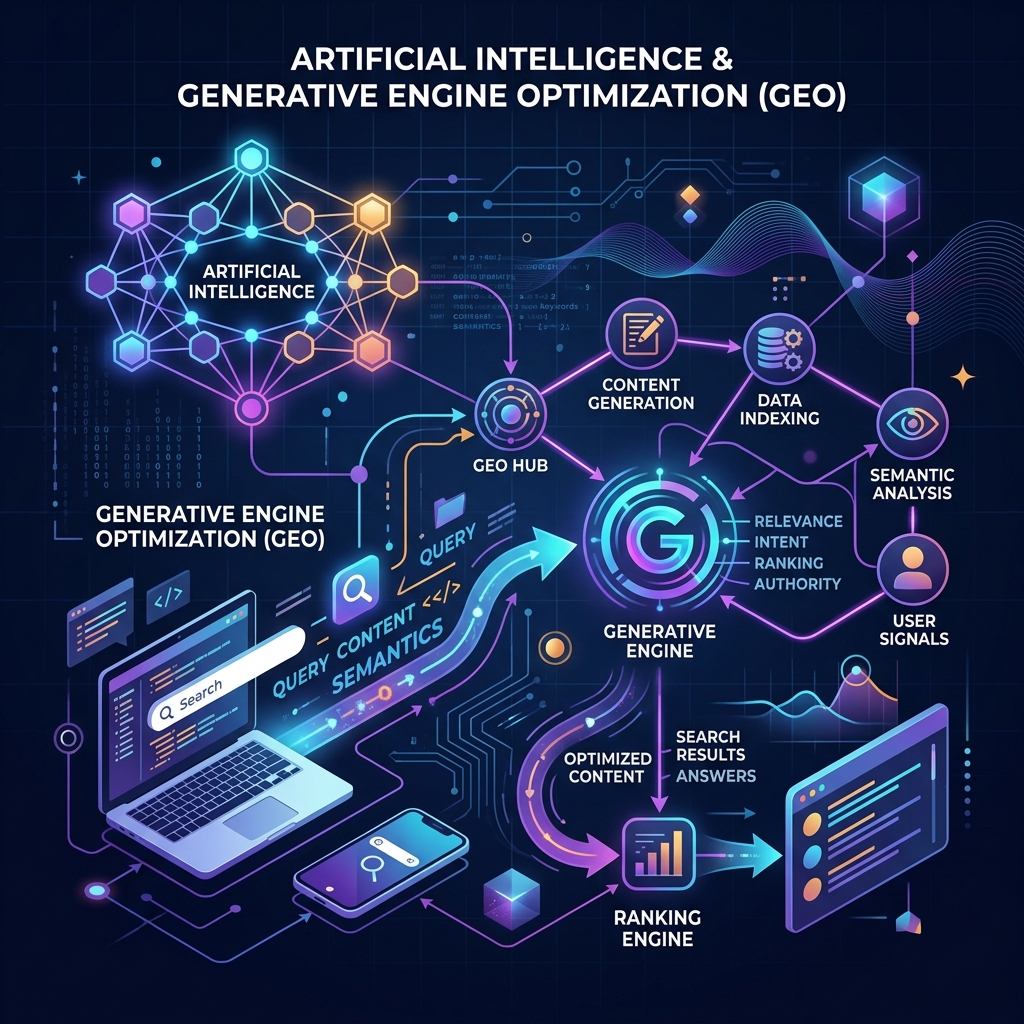
The digital landscape is shifting from traditional keyword searches to AI-driven, conversational query processing. At the core of this transition is generative engine optimization. Unlike standard SEO, which focuses on ranking links on search engine results pages, this approach optimizes content to be directly cited, synthesized, and featured by generative AI models like ChatGPT, Perplexity, and Google’s AI Overviews.
What is generative engine optimization?
If you are wondering what is generative engine optimization, it is the practice of structuring and creating content so that large language models (LLMs) can easily understand, verify, and cite it when generating responses for users. Instead of just trying to rank on the first page of Google, the goal is to become the trusted source that AI engines pull from to answer user queries.
AI engines prioritize content that demonstrates expertise, depth, and clarity. They look for comprehensive answers to specific questions rather than generic overviews. This means content must be highly structured, fact-based, and easy for machines to parse. As companies integrate these concepts, understanding the foundational technology is crucial; exploring resources like our guide on demystifying AI agents can provide deeper context on how these systems operate behind the scenes.
How do you do generative engine optimization?
When asking how do you do generative engine optimization, the focus shifts from traditional keyword stuffing to building authority and clarity. Here are the core strategies to effectively optimize for AI engines:
- Focus on direct answers: Start your articles or sections by directly answering the question a user might ask. AI models prefer concise, accurate summaries that they can easily extract.
- Implement clear structuring: Use descriptive headings, bullet points, and tables. Well-structured data allows LLMs to process the relationships between different pieces of information quickly.
- Prioritize primary sources and statistics: AI engines value factual accuracy. Including original research, verifiable data points, and expert quotes increases the likelihood of your content being selected as a trusted source.
- Maintain conversational phrasing: Write naturally. Since users often interact with generative AI using conversational questions, your content should mirror that natural language flow.
Additionally, as part of your overall strategy, leveraging advanced tools can streamline the process. For instance, Vera Intelligence features a specialized tool that creates SEO content plans that are optimized for GEO as well, ensuring your content meets the strict requirements of both traditional and AI-driven search algorithms.
What are the best generative optimization tools?
Identifying the best generative optimization tools involves looking for platforms that can analyze how AI models perceive your content and suggest improvements based on entities rather than just keywords. These tools help you understand semantic relationships and identify gaps in your content that an AI might notice.
When evaluating options, you should also consider your broader analytics stack. Integrating these optimization efforts with comprehensive data platforms, much like those discussed in our overview of business intelligence tools, ensures that your content strategy aligns closely with overarching business metrics and user behavior insights.
How do you choose the best search engine optimization tools keyword generator?
While GEO is the future, traditional SEO still matters. Selecting the best search engine optimization tools keyword generator requires balancing search volume metrics with semantic relevance.
- Look for intent analysis: The tool should identify whether a keyword is informational, navigational, or transactional.
- Evaluate semantic grouping: Modern tools group related keywords into topics or clusters, which is essential for comprehensive content coverage that AI engines favor.
- Assess competitive gap analysis: A robust tool will show you what topics your competitors are covering that you are missing, helping you build a more authoritative resource.
By bridging the gap between traditional keyword research and modern semantic structuring, you position your content to succeed in both classic search results and the emerging generative AI landscape.
Ready to automate your workflows?
Deploy intelligent agents built specifically for your operations. Cut costs, eliminate manual tasks, and scale effortlessly.